Learning the value of an old coin can feel like detective work: a little measuring, some sleuthing through catalogs, and a healthy skepticism. This guide walks you through the whole process—identify, examine, research, and decide—using tools and resources that collectors and dealers actually use. No jargon-heavy lectures, just clear steps you can follow whether you’ve found a coin identifier app in a shoebox or inherited a small collection.
Start by identifying the coin
Before you worry about value, get basic identification right. Look for the country, denomination, date, mintmark and any obvious variety or error. Those details alone eliminate a lot of confusion and help you find comparable pieces. — Read the obverse and reverse carefully (head, date, legends, shield, wreaths). — Check the edge: plain, reeded, lettered, or decorated. — Note any mintmark (small letter or symbol indicating where it was struck). — Photograph the coin from both sides under good light to capture details. Identification is deceptively important. A seemingly valuable date could be a common later restrike, or a worn rare coin might be worth less than a nicer common piece. Get the facts nailed down first, then move on.
Simple identification checklist
- Country and denomination
- Exact year and mintmark
- Coin metal (silver, gold, copper, nickel, etc.)
- Any obvious variety or mint error
- Condition (wear, scratches, corrosion)
Tools you’ll want—small investment, big return
You don’t need fancy gear to start. A few inexpensive tools make identification and grading far more reliable.
| Tool | Use | Notes |
|---|---|---|
| 10x jeweler’s loupe | Inspect details, die marks, mintmarks, hairlines | Standard for coin inspection |
| Digital calipers | Measure diameter and thickness | Helpful to verify specification |
| Precision scale (grams) | Confirm weight against reference | Detects some counterfeits or clipped coins |
| Soft gloves & microfiber cloth | Handle coins safely | Avoid fingerprints and oils |
| Reference books or phone/tablet | Compare images and specs | Digital resources often faster |
Understanding condition: grading basics
Condition drives value more than almost anything else. Two identical coins can be worth wildly different sums depending on wear, damage, and eye appeal. Most modern collectors use the Sheldon scale, which runs from 1 to 70. You don’t need to memorize every number, but know the broad groups.
| Grade group | Sheldon range | Short description |
|---|---|---|
| Poor to Fair | 1–3 | Very worn, date may be partially gone |
| Good | 4–10 | Major features visible but heavily worn |
| Fine to Very Fine | 12–30 | Moderate to light wear, major devices visible |
| Extremely Fine to About Uncirculated | 40–58 | Minor wear on high points, strong detail |
| Mint State | 60–70 | No circulation wear; varies by blemishes and luster |
A couple of practical pointers: never clean a coin to “improve” it—cleaning almost always reduces value. And eye appeal matters: two coins with the same grade may sell at different prices based on toning, color, and surface quality.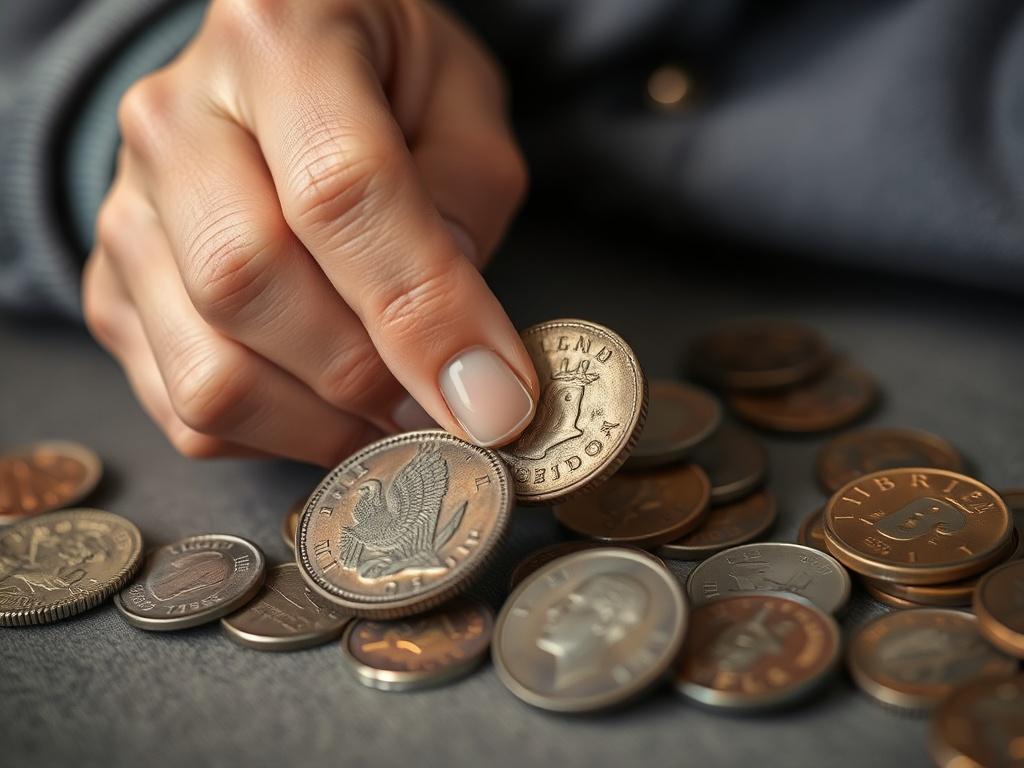
Rarity, varieties and other value multipliers
Value is a mix of scarcity and demand. A low mintage helps, but survival rate does too—how many of those coins still exist in collectable condition? Varieties (repunched mintmarks, doubled dies, overdates) and errors (off-center, clipped planchets, wrong planchet) can create collectible niches where values jump. Consider these factors: — Original mintage vs. estimated survivors — Collector demand for that series and year — Well-known varieties (use specialist catalogs) — Historical provenance (coins from famous hoards often fetch premiums) For world coins, the Krause Standard Catalogs are invaluable. For U.S. coins, the Red Book (A Guide Book of United States Coins) and PCGS/NGC price guides are go-to references.
Where to research market prices
You’ll want both published guides and real-world sale records. Published price guides give a baseline; auction results show what buyers actually pay.
| Resource | Best for | How to use it |
|---|---|---|
| PCGS Price Guide / NGC Price Guide | U.S. and modern graded coins | Compare your coin’s grade and type to see estimated values |
| Heritage / Stack’s Bowers / Sotheby’s archives | Recent auction realizations | Search by date/variety to find sale prices |
| Numista / CoinArchives | World coins and variety records | Good for images, mintage data, and market trends |
| eBay completed listings | Real-world private sale prices | Look for “sold” results to see actual sale amounts |
| Printed catalogs (Red Book, Krause) | Established reference values | Use as baseline; adjust for current market |
Compare the price guides to recent auction sales and online completed listings. If guides show a range, the auction records tell you where the market is trending.
Detecting fakes and common problems
Counterfeits and altered coins exist. Use simple tests before assuming value. Checklist of red flags: — Weight and diameter mismatch the reference by more than a small tolerance. — Magnetism when the genuine metal is non‑magnetic. — Edges, reeding, or lettering that look incorrectly formed or inconsistent. — Suspicious tooling marks or evidence of “cleaning” that removes natural surfaces. — Unusually high luster or color inconsistent with known toning for that issue. Do not rely on a single test. Compare to detailed reference photos, consult a dealer, or seek an opinion from a reputable third‑party grader if you suspect something valuable or suspicious.
Selling options and tradeoffs
Deciding how to sell influences how much you’ll net. Here’s a quick comparison.
| Option | Pros | Cons |
|---|---|---|
| Local coin dealer | Quick sale, immediate cash, face-to-face negotiation | Dealer profit margin can be significant |
| Coin show / auction house | Access to collectors willing to pay top prices | Seller fees, longer timeline, consignment waits |
| Online marketplaces (eBay) | Wide audience, possible competitive bidding | Listing fees, shipping risk, need convincing photos and descriptions |
| Third-party grading then sale | Grading certifies authenticity/grade and often increases value | Grading fees and wait time; not worth it for low-value coins |
If a coin is modest value, a local sale or online sale may be simplest. For high-value or rare coins, grading and professional auction consignment usually achieve higher prices despite fees.
Step-by-step practical process
Follow this flow when you pick up a coin: 1. Photograph both sides and the edge under good lighting. 2. Identify country, denomination, date, and mintmark. 3. Weigh and measure; compare to reference specs. 4. Inspect with a loupe for die markers, doubling, or errors. 5. Assign a provisional grade using the Sheldon categories. 6. Check price guides and recent auction results for similar grade/variety. 7. Run counterfeit checks (weight, dimensions, magnet, compare images). 8. If uncertain and potentially valuable, get a second opinion from a reputable dealer or submit for third‑party grading. 9. Decide your selling route based on likely value and how quickly you want to sell.
Storage, preservation and avoiding mistakes
Store coins in stable, dry environments—low humidity, consistent temperature. Use inert holders (Mylar flips, 2×2 holders, or certified slabs). Keep them out of PVC holders that produce greenish residue. Avoid cleaning: never use abrasives, dips, or polishing. If a coin looks dirty or corroded, get advice before doing anything.
When to consider third‑party grading
Third‑party grading (PCGS, NGC, ANACS) makes most sense when: — The coin is potentially worth enough to cover grading fees. — The market strongly prefers certified examples (e.g., high-grade U.S. Type coins, rare proof coins). — You want the extra confidence for selling at major auctions. Grading adds credibility and often a price premium, but it isn’t free. For common or low‑value coins, certification may reduce the net you receive.
Useful resources at a glance
- Red Book (A Guide Book of United States Coins) — good baseline for U.S. issues.
- PCGS and NGC price guides and population reports — check graded populations and price trends.
- Krause Standard Catalogs — essential for world coins and mintage data.
- Heritage/Stack’s Bowers archives and CoinArchives — auction realizations for proven sale prices.
- Numista and community forums — helpful for obscure world coins and varieties.
Conclusion
Checking the value of an old coin is part measurement, part research, and part judgment. Start with careful identification and condition assessment, use modest tools to verify specifications and spot fakes, consult multiple price references and recent auction results, and only consider professional grading when the coin’s likely value justifies the cost. Take your time, keep good notes and photos, and when in doubt ask a reputable dealer or experienced collector—most of them are happy to help a newcomer learn the ropes.